
InnoTrans is the leading international trade fair for transport technology, held every two years in Berlin. For four days, rail operators, depot managers, rolling stock manufacturers, engineering consultants and suppliers from around the world meet under one roof. At InnoTrans 2026, BM Makina Group presents DEMYKS, its brand of rail vehicle maintenance equipment, designed and manufactured in Türkiye since 2011.
This article introduces the three solutions you can examine closely at our stand, explains how they differ and lists the project information worth bringing along, so that your visit turns into a concrete technical conversation.
Dates: 22–25 September 2026
Venue: Messe Berlin, Germany
Hall and stand: Hall 6.2 · Stand 940
Why InnoTrans matters for rail vehicle maintenance
The efficiency of a maintenance depot is largely decided by the equipment inside it. How quickly a vehicle can be lifted, how a bogie is exchanged and how safely technicians work underneath a car body are all determined by equipment decisions made while the depot is still being designed. Those decisions usually remain in place for decades.
InnoTrans is where new depot projects and modernisation programmes are discussed. Seeing equipment at its real scale, rather than in a brochure, and talking directly to engineers about vehicle types, axle loads and track layout makes it possible to take the right decision at a much earlier stage. That is exactly why DEMYKS is at the fair: to show how lifting, rotating and positioning equipment can be adapted to each project.
A manufacturing partner with engineering under one roof
For operators and contractors outside Türkiye, the practical question is often not only what the equipment does, but who stands behind it. BM Makina Group has more than 26 years of experience in industrial lifting, exports to more than 30 countries across Europe, the Americas, the Middle East and Asia, and has completed more than 1,500 projects. Engineering, design, production and service are managed from our facilities in Gebze, so every DEMYKS system is developed by the same team that manufactures and supports it.
This matters in rail projects, where equipment has to fit a specific fleet, a specific depot and often a specific tender specification. Our mobile lifting jacks are designed in line with EN 1493 and CE requirements, and every system is engineered for the capacities and dimensions the project calls for.
Three solutions to see at our stand
The DEMYKS range extends from work platforms to turntables. The three products below address the needs we meet most often in rail maintenance depots and rolling stock production plants. Select a card to open the product page.
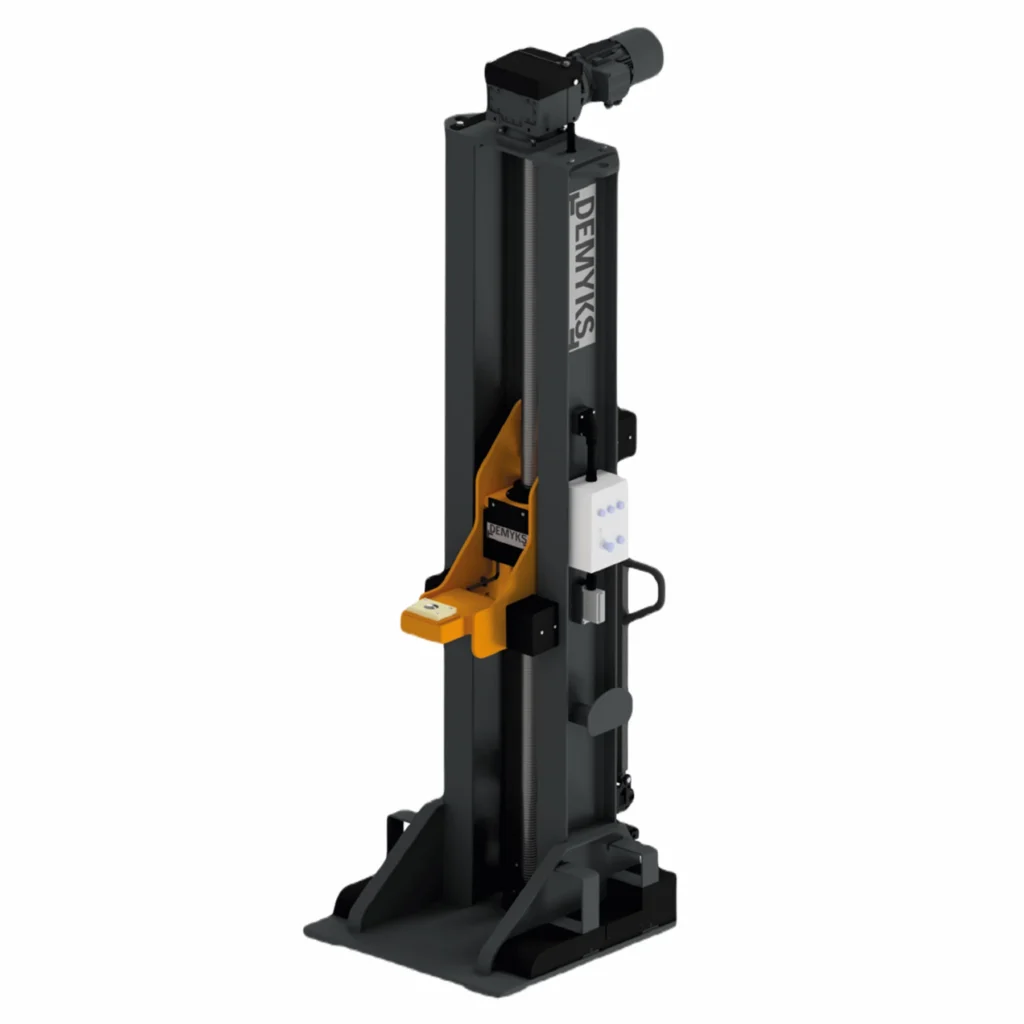 DEMYKSMobile Lifting JacksTwin-column design with hydraulic travel, for wagons, locomotives and heavy vehicles.View product →
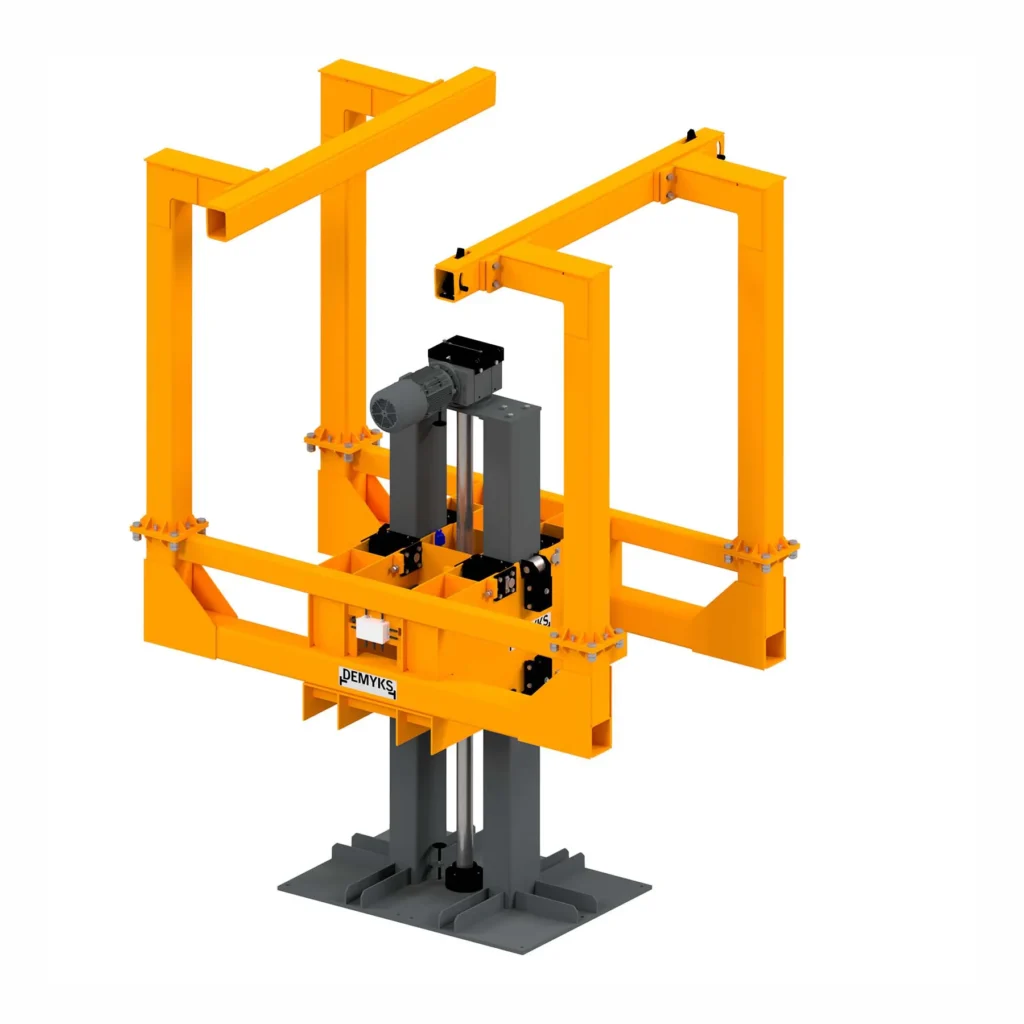 DEMYKSUnderfloor Lifting SystemsBuilt into the depot floor; lifts a complete trainset in one operation and speeds up bogie exchange.View product →
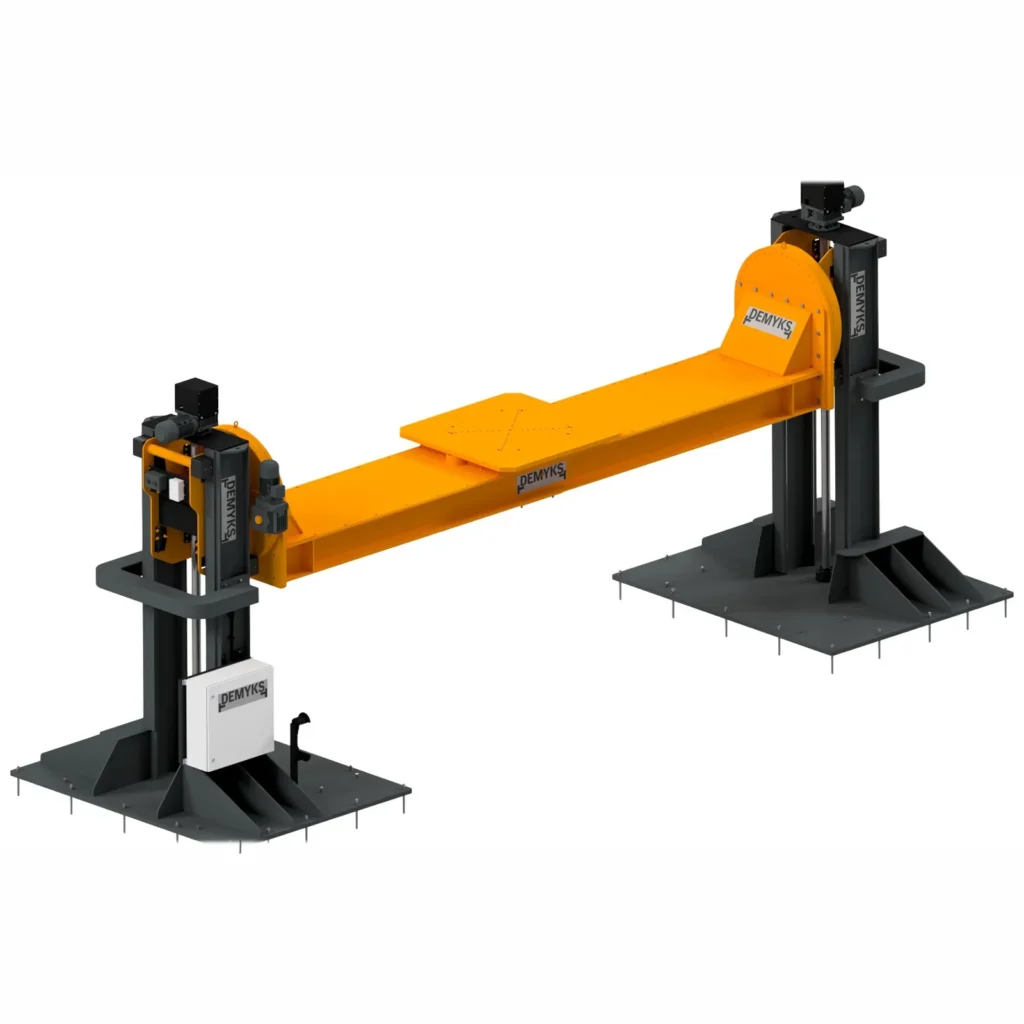 DEMYKSManipulatorsLifting, rotating and tilting combined in one system for welding and assembly.View product →
Mobile Lifting Jacks
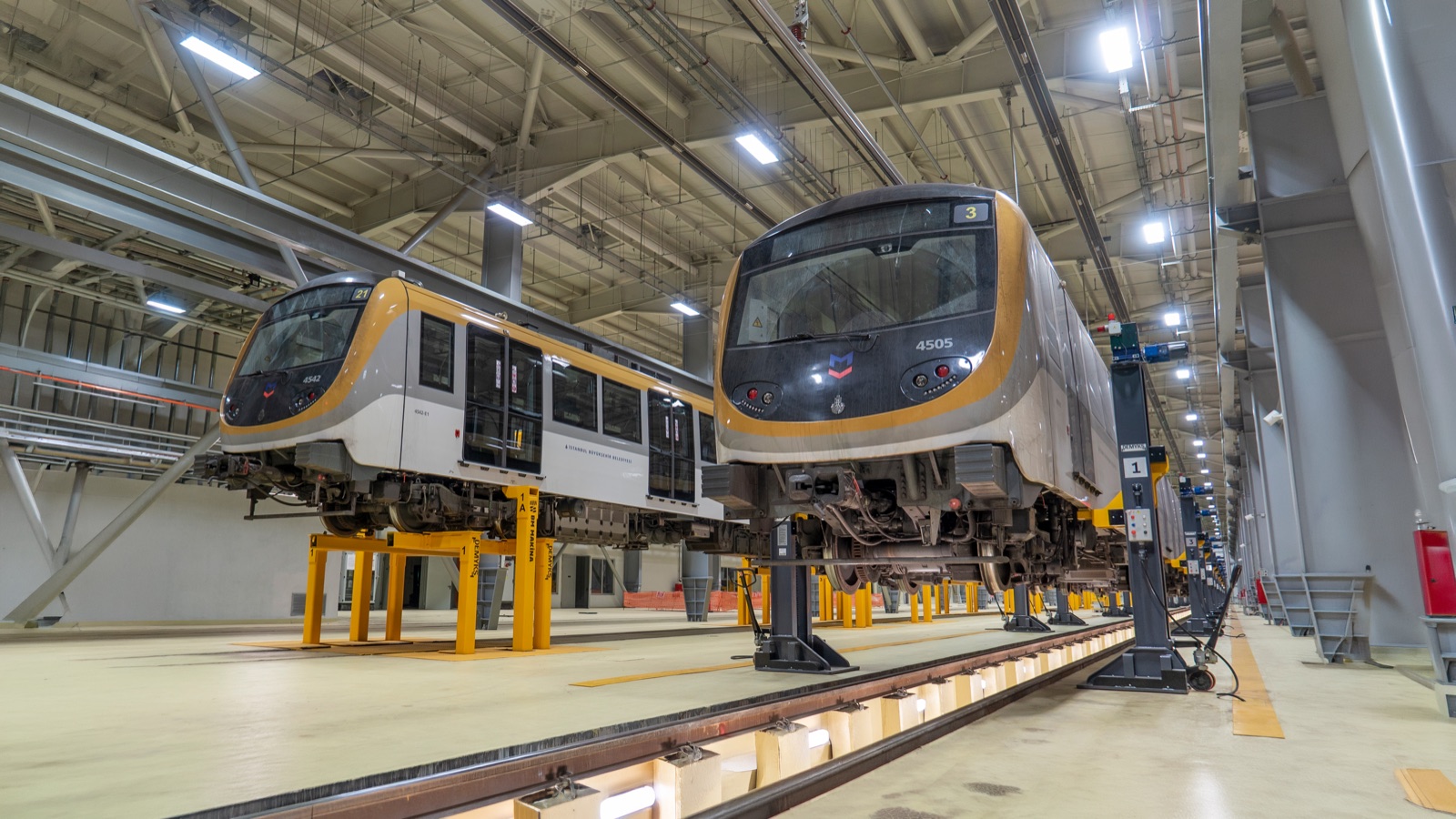
DEMYKS Mobile Lifting Jacks are developed for safe lifting during the maintenance, repair and production of wagons and locomotives. The twin-column construction distributes the load evenly and keeps the vehicle stable while it is raised, while the hydraulic travel system allows the jacks to be moved easily across the workshop and positioned precisely at each lifting point.
An optional interchangeable lifting nose lets the same set of jacks adapt to different vehicle types: when a new lifting requirement arises, only a new nose is manufactured and the existing jacks stay in service. The system can also be used for buses, trucks and heavy machinery. The jacks are built in line with EN 1493 and CE requirements, in the capacities and dimensions each project requires.
Underfloor Lifting Systems
DEMYKS Underfloor Lifting Systems are fully integrated into the depot floor. When they are not in use, nothing remains on the surface and the workshop is completely clear. The lifting columns are aligned with the track axes, and the lifting points are positioned to meet the bogie or car body support points of the vehicle.
This configuration makes it possible to lift an entire trainset, or only a selected car, in a single operation. With the auxiliary rail arrangement, the bogies are lowered once the vehicle has been raised and rolled out from underneath along the track, so bogie exchange is carried out quickly, safely and ergonomically. Electrohydraulic and electromechanical drive options, combined with electronic control panels, keep every lifting point synchronised.
Manipulators
DEMYKS Manipulators are hybrid systems that combine the lifting capability of a manipulator with the precise rotation of a welding positioner. They consist of three modules: a column and boom that raise and lower the workpiece, a turntable that rotates it through 360°, and a rotating chuck that tilts it on the horizontal axis for access to different faces.
Large and heavy workpieces can therefore be positioned and held on every axis during welding and assembly, and the operator always works from the best angle. Equipped with PLC-based control, inverter-driven rotation and an emergency stop system, the manipulators are designed around the load and rotation capacities of each project.
Mobile jacks or an underfloor system?
This is the question we hear most often at trade fairs. Both systems lift vehicles, but they are designed for different conditions. The right choice depends on the stage your depot is at and how its maintenance lines will operate.
| Criterion | Mobile lifting jacks | Underfloor lifting system |
|---|---|---|
| Installation | No intervention in the floor | Integrated into the floor; planned together with the depot design |
| Use of space | Moved aside when not in use | Nothing remains on the surface |
| Flexibility | Can serve different tracks and vehicle types | Engineered for a specific track and fleet |
| Lifting | One jack positioned at each lifting point | Complete trainset or single car in one operation |
| Bogie exchange | Carried out with separate equipment after lifting | Integrated through the auxiliary rail arrangement |
| Best suited to | Existing depots and multi-purpose workshops | New depot investments and high-throughput maintenance lines |
Many depots use both: an underfloor system on the busiest maintenance line, and mobile jacks on other tracks and for unplanned interventions.
Getting the most out of your visit
If you would like to go beyond a general introduction, bringing the following information allows us to focus the discussion directly on your project:
- Vehicle types to be maintained (locomotives, EMUs, metro, tram or freight wagons) and their bogie arrangements
- Vehicle and bogie weights, and the position of the lifting points
- Number of tracks and the layout of the depot
- Existing floor and inspection pit conditions
- Maintenance regime: daily inspection, scheduled maintenance or heavy overhaul
- Applicable standards or tender requirements, and the target project timeline
We recommend booking a meeting with our engineering team in advance, so that we can set aside time to review the details of your project at the stand.
Unable to travel to Berlin?
You do not need to be at the fair to have the same conversation. Technical catalogues for all DEMYKS products are available on our product catalogues page, and our team can arrange an online meeting to assess your project remotely. You can also read our press release on our participation in InnoTrans 2026.
Frequently asked questions
When and where does InnoTrans 2026 take place?
InnoTrans 2026 takes place from 22 to 25 September 2026 at the Messe Berlin exhibition grounds in Berlin, Germany. You can find BM Makina Group at Stand 940 in Hall 6.2.
Where are DEMYKS products manufactured?
DEMYKS equipment has been designed and manufactured by BM Makina Group in Gebze, Türkiye, since 2011. Engineering, production and service are all managed by the same team.
What is the main difference between mobile lifting jacks and an underfloor lifting system?
Mobile lifting jacks require no intervention in the floor and can be used on different tracks. Underfloor lifting systems are built into the floor, leave the workshop completely clear when not in use and can lift an entire trainset in a single operation.
Can the equipment be adapted to our fleet and project requirements?
Yes. DEMYKS equipment is engineered project by project, based on vehicle type, load capacity and track configuration. With the interchangeable lifting nose, mobile lifting jacks can also be adapted to new vehicle types later on.
Book a meeting with us at InnoTrans 2026. Contact our team — Hall 6.2 · Stand 940.