
1) What Is an Electric Chain Hoist and Where Is It Used?
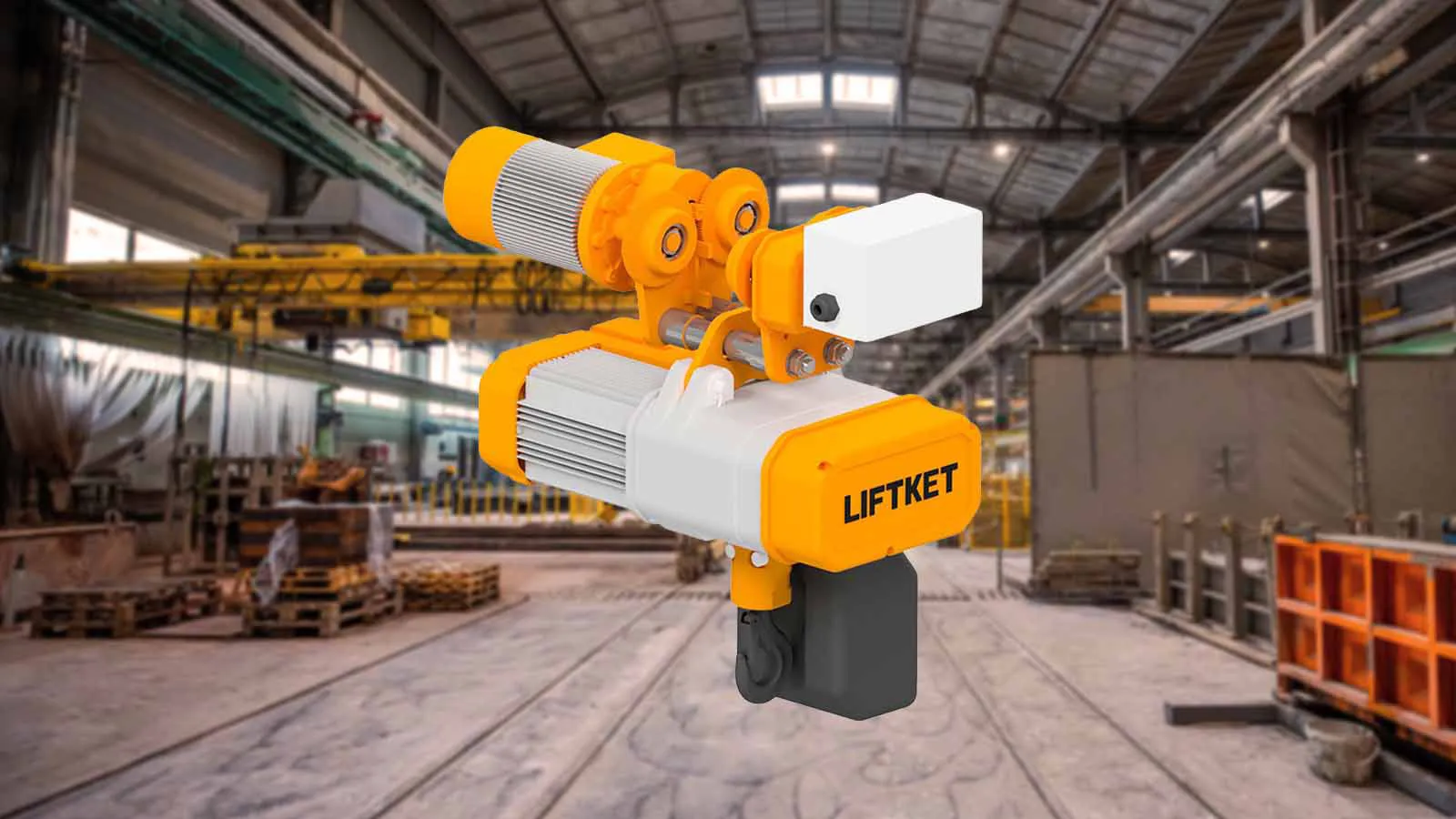
An electric chain hoist is a compact lifting solution that raises loads via a chain and is typically preferred in applications such as station-based lifting, assembly lines, maintenance areas, warehouses, production and stage systems.
When the right product is chosen:
- Operations speed up and labour is reduced
- Loads are positioned more precisely
- A lower fault rate and safer operation are achieved
2) 7 Critical Criteria for Choosing the Right Hoist
Clarifying the following criteria is the foundation of selecting the “right model”:
2.1 Capacity (Tonnage) and Safety Margin
Capacity is selected according to the load weight; but not only the nominal load — dynamic effects (acceleration, sway, sudden stops) must also be taken into account. Practical approach: plan a safe margin according to the character of the application.
2.2 Lifting Height (Hook Travel)
Lifting distance is not just a matter of a “high ceiling”. Under-hook height, hook approach and station geometry determine the right height.
2.3 Duty Class (FEM / ISO) and Duty Cycle
The most common mistake: the capacity is chosen correctly but the duty class is chosen wrong.
- Frequent use + intensive shifts = a higher duty class is required
- If a low duty class is selected, premature wear and maintenance increase
2.4 Lifting Speed and Control Needs
Speed determines efficiency, but control matters too. Some applications require fast lifting, while others require micro-movement and precise positioning. Here, speed options and the control infrastructure become critical.
2.5 Environmental Conditions (Dust, Moisture, Heat, Chemical Exposure)
Production floor, paint line, foundry area, outdoors or backstage… every environment requires a different level of protection. In the selection, consider:
- Protection class (IP),
- Corrosion risk,
- Temperature range,
- Operating pattern.
2.6 Safety Equipment and Accessories
For safe lifting, safety details are as important as equipment selection:
- Overload protection
- Limit switch (upper/lower)
- Brake system
- Hook safety and suitable slinging equipment
- Optional remote control / control solutions
2.7 Integration: Rail, Crane System and Power Supply
An electric chain hoist is never considered on its own; in most projects it is part of a “package solution”:
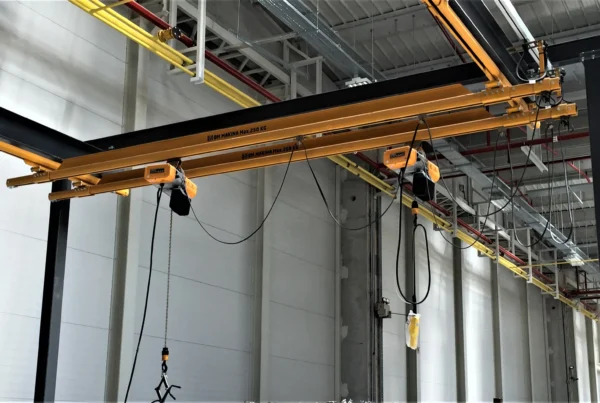
- Station-based ergonomic handling with BKB / ALUBKB light crane systems
- Uninterrupted supply on moving lines with VAHLE power transmission systems
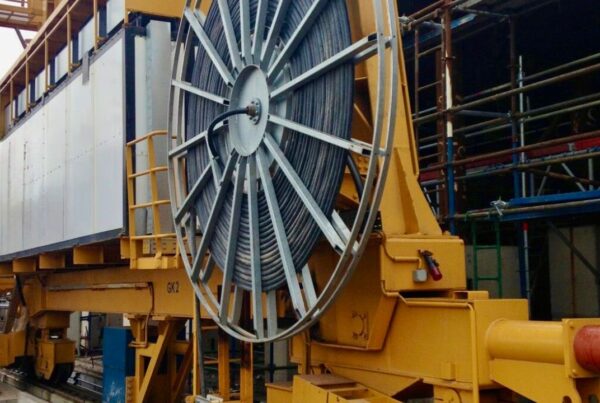
- Cable management and a tidy site with KATO cable reels
This integration significantly increases both safety and system life.
3) Industrial Use vs Stage/Rigging Use (The STAGEKET Difference)
The choice of “field of use” for electric chain hoists has a direct impact:
Industrial Use (LIFTKET)
- Production, assembly, maintenance, warehouse, workshop
- Continuity and durability are the priority
- Shift work and high duty-cycle scenarios are common
Stage and Rigging (STAGEKET)
- Events, concerts, theatre, above-stage mechanics
- Quiet operation, precise control and safety procedures stand out
- In scenarios where loads work above people, safety layers are far more critical
In short: the “same tonnage” can have completely different technical requirements in two different worlds.
4) The Package-Solution Approach with BM Makina
BM Makina’s advantage is being able to engineer not just the hoist but the whole system together:
- LIFTKET / STAGEKET: the lifting unit
- BKB / ALUBKB: carrying the load along the line (monorail, bridge, station solutions)
- VAHLE: the power transmission infrastructure (conductor rail, festoon, etc.)
- KATO: cable management (motorized reel, reeling solutions)
Thanks to this approach:
- Compatibility problems are reduced
- Installation progresses faster
- Service and spare-parts management become easier
- Total cost of ownership drops
5) Quick Selection Checklist
Clarify these 6 questions and you will get very close to the right model quickly:
- What is the maximum load (kg/tonne) and load character?
- Lifting height and working-area geometry?
- Daily operating time / shift / duty cycle?
- Required lifting speed and control precision?
- What are the environmental conditions (dust/moisture/heat/outdoors)?
- Which infrastructure will the system integrate with (BKB-ALUBKB, VAHLE, KATO)?
Conclusion
Choosing the right electric chain hoist means occupational safety, efficiency and long life. When LIFTKET and STAGEKET solutions are combined with the right capacity, the right duty class and the right integration, they provide your operation with a lifting infrastructure that is both safe and sustainable.
In choosing an electric chain hoist, the duty class (FEM), duty cycle and safety equipment are as decisive as the correct capacity. By offering integrated solutions with LIFTKET/STAGEKET, BKB-ALUBKB lines, VAHLE power transmission and KATO cable management, BM Makina delivers uninterrupted operation, low maintenance cost and high occupational safety.